
Ski tours in the Zillertal: Discover the best winter routes
Ski touring in the Zillertal: Discover the best winter routes
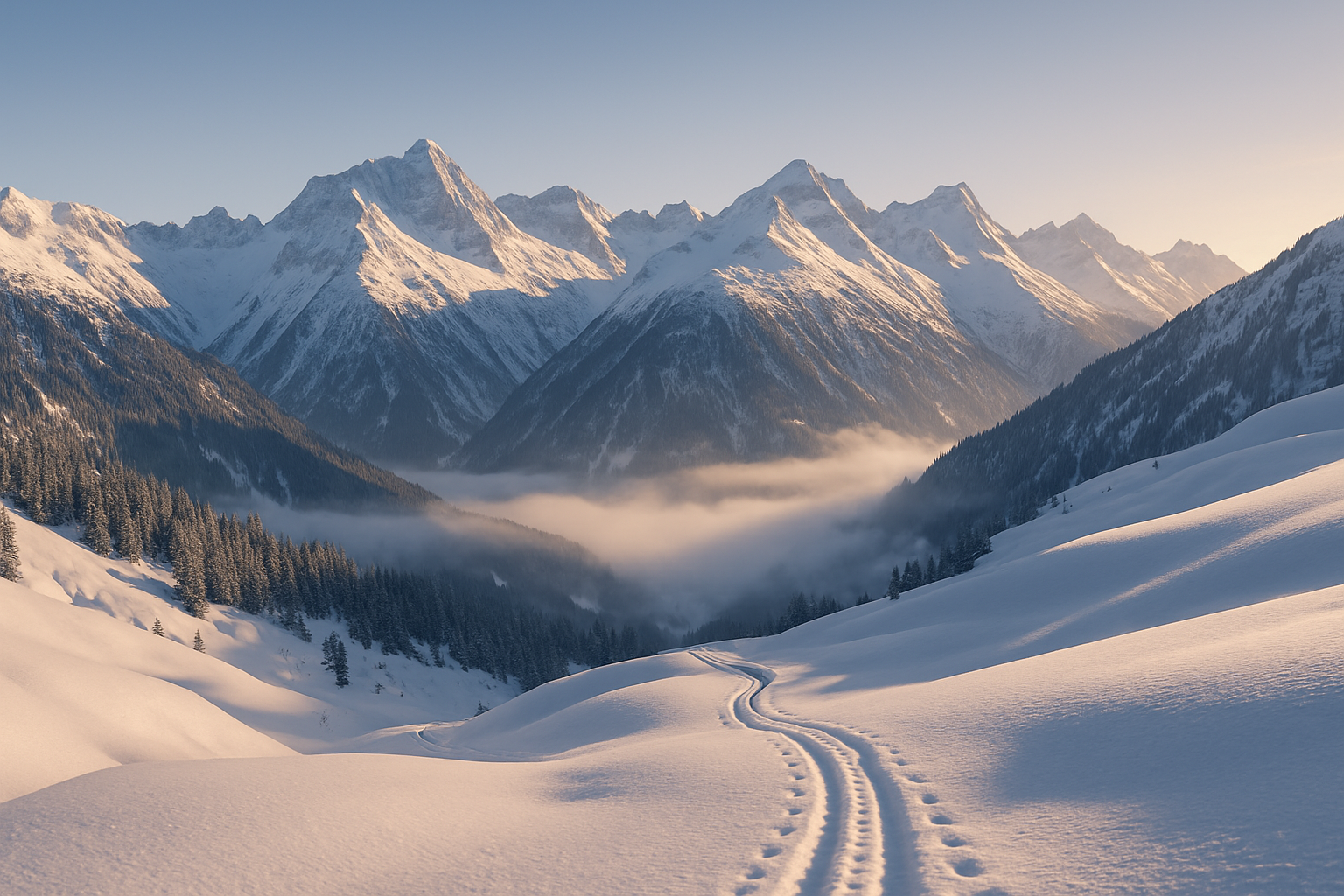
When winter arrives in the Zillertal Valley, the hearts of all ski tourers beat faster – crisp air, snow-covered peaks, and secluded slopes beckon. Especially now, between January and March, conditions for ski touring are ideal: a reliable snowpack, stable temperatures, and plenty of sunny days. In this article, we present the most beautiful and varied ski tours in the Zillertal – including tips for beginners, tour suggestions for intermediate skiers, and high-alpine challenges for experts. You'll find detailed tour descriptions with elevation gains, hiking times, starting points, and legal and safety information. Whether it's the Höllenstein Hut for beginners or the Hoher Riffler for pros – here you'll find your perfect winter route in the Zillertal!
- Ski touring in the Zillertal: Overview & special features
- Beginner-friendly ski tours in the Zillertal
- Tours for advanced participants – Challenging, but rewarding
- For professionals: High-alpine challenges with panoramic views
- Avalanche danger & safety in the terrain
- Equipment tips for a safe ski tour
- Comparison table: Best ski tours at a glance
- Avoid common mistakes – practical pro tips
- FAQ: Everything you need to know about ski touring in the Zillertal
- Conclusion: Find your perfect ski tour in the Zillertal
Ski touring in the Zillertal: Overview & special features
Location and topography
The Zillertal valley lies in the Tyrolean lowlands and forms one of the most important side valleys of the Inn valley. It is framed by the Tux Alps to the west and the Zillertal Alps to the south. Striking peaks such as the Hohe Riffler (3,231 m) and the Napfspitze (3,144 m) rise majestically above the valley floor. Alpine glacier slopes and extensive foothills make the terrain ideal for ski tours of all difficulty levels.
Why the Zillertal is a ski touring hotspot
What makes the Zillertal particularly attractive for ski tourers is the diversity of the terrain: from sparsely wooded southern slopes to challenging north faces and glacier tours at 3,000 meters, the spectrum is vast. Thanks to well-developed infrastructure – such as the Zillertal High Alpine Road, mountain huts like the Wedelhütte, and easy parking – many tours are easily accessible. Furthermore, the region offers excellent conditions for so-called "hybrid tours," meaning tours that start with access to a ski lift followed by a further ascent on foot.
Seasonal conditions
While classic ski tours are generally safe from January to March, the season for high-alpine glacier ascents (e.g., Napfspitze, Hoher Riffler) usually doesn't begin before mid-March. The stable spring conditions from the end of March onwards allow for safe ascents on firn snow and reduce the overall avalanche risk with an early start.
Beginner-friendly ski tours in the Zillertal
What makes a ski tour beginner-friendly?
Suitable tours for beginners should be not technically demanding, have gentle slopes, and be well-structured. An ascent with a maximum of 600–700 meters of elevation gain is sufficient for beginners. A nearby mountain hut for orientation and resupply provides additional safety. Good accessibility by car or public transport, as well as a safe return option in case of a change in weather, are also important.
Höllenstein Hut – Ski tour through the Tux Valley
The tour to the Höllenstein Hut (1,740 m) from Lanersbach is perfect for ski touring beginners. The ascent follows a well-marked trail through light forests to the hut. You'll cover the approximately 500–600 meters of elevation gain in about 2 to 2.5 hours. Once you reach the top, traditional Tyrolean cuisine awaits you on the sun terrace. The descent leads down gentle, rolling slopes – a delight even with moderate snow conditions.
Pfaffenbichl near Hochfügen
Another classic for beginners is the Pfaffenbichl (2,435 m) near Hochfügen. The starting point is the large hiking parking lot near Hochfügen, easily accessible from Fügen. The ascent follows a well-known route along gentle slopes with unobstructed views. With an elevation gain of around 500–700 meters and a hiking time of 3 hours, this ski mountain is a safe and enjoyable experience – even manageable in avalanche warning level 2, as the slopes are very gentle.
Hirschbichlalm in the Zillertal Arena
Ideal for families or those new to ski touring: the ascent to the Hirschbichlalm (1,700 m). From Gerlos Gmünd, a groomed trail leads along forest roads and alpine meadows to the rustic mountain hut. With only 400 meters of elevation gain and a hiking time of around 2 hours, this tour is particularly suitable for children or less experienced ski tourers. Snowshoers and hikers are also regularly seen here.
- Tour start: Gerlos Gmünd (parking lot)
- Elevation difference: 400 meters
- Duration: approx. 2 hours
- Difficulty level: easy
Equipment tips for beginners
- Touring skis + skins
- Avalanche transceiver equipment (avalanche transceiver, probe, shovel)
- Helmet & weather-appropriate clothing
- Thermos with warm tea + small snack
- Tour map or GPS device
Tours for advanced participants – Challenging, but rewarding
Marchkopf via Wedelhütte
The Marchkopf (2,499 m) is a challenging but very rewarding tour in the Hochzillertal valley. The starting point is the parking lot on the Zillertal High Alpine Road above Kaltenbach. With an elevation gain of 850 meters and a hiking time of about 3–4 hours, the ascent leads partly across open terrain and partly along an old trail. A highlight is the stop at the futuristic-looking Wedelhütte at 2,350 m – ideal for a refreshment before the descent from the ridge.
Gilfert von Hochfügen
The Gilfert (2,506 m) is one of the most popular ski peaks in the region. The starting point is the end of the Hochfügen valley, where free parking is available. The ascent of approximately 1,200 meters in altitude leads across undulating terrain with breathtaking panoramic views of the Inn Valley. The route requires solid technique and good physical condition, but can be planned effectively even in moderate avalanche conditions.
Rastkogel from Innerst
A scenic tour leads to the Rastkogel (2,762 m). Start in Innerst in the Tux Valley at 1,250 meters. The ascent follows broad south-facing slopes to an altitude of around 1,100 meters – hiking time approximately 4–5 hours. An early start is advisable, as the sun is strong on the slopes. The descent options range from leisurely to challenging – depending on the route chosen.
Kraxentrager – Friesenberghaus
Starting from the Schlegeis Reservoir (1,786 m), this technically easy but long ski tour takes you to the Kraxentrager (2,999 m) – a prominent rocky peak in the Zemm Valley. With 1,200–1,400 meters of elevation gain and a hiking time of around 6 hours, you should be in good physical condition and have good navigational skills.
| tour | Elevation gain | Length of time | Best time | region |
|---|---|---|---|---|
| Marchkopf | 850 | 3–4 h | January–April | Hochzillertal |
| Gilfert | 1200 | 4.5–5 h | Jan–Mar | Tux Alps |
| Rastkogel | 1100 | 4–5 h | January–March | Tuxer Kamm |
| Backpack carrier | 1200–1400 | 6 h | February–April | Zemmgrund |
For professionals: High-alpine challenges with panoramic views
Wandspitze from the Zillergrundalm
The ski tour to the Wandspitze (2,626 m) is one of the most challenging routes in the Zillertal valley. The starting point is Bärenbad in the Zillergrund valley. You can expect an ascent of around 1,300 meters, a hiking time of 5–6 hours, and an exposed ridge section shortly before the summit. This tour should only be attempted in stable avalanche conditions (maximum level 2) and with complete emergency equipment.
High Riffler of Hintertux
The Hohe Riffler (3,231 m) is the highest skiable peak in the region. The tour begins at the valley station of the glacier cable car in Hintertux. The technically and physically demanding ascent leads across the glacier to an altitude gain of approximately 1,500 meters (7–8 hours). Alpine experience, glacier equipment, and perfect conditions are absolutely essential.
Napfspitze from the Zillerscharte
This glacier tour starts in Ginzling (Zillerscharte). With 1,300–1,500 meters of elevation gain and challenging terrain, it is considered the southernmost high-alpine tour in the Zillertal valley. The ascent is recommended in late spring (March–May) when the snow conditions are stable and the days are longer. Caution: This tour is only for experienced mountaineers with glacier experience!
Warning:
- Only with glacier equipment (crampons, rope, ice axe, harness)
- Check the avalanche bulletin daily (www.lawinen.report)
- Following the trail on the glacier is only possible in a roped team with knowledge of crevasse.
Avalanche danger & safety in the terrain
Understanding avalanche warning levels
The European avalanche scale has five levels:
- Level 1 (low): Tours possible, standard equipment is sufficient
- Level 2 (moderate): increased caution on steep slopes
- Level 3 (significant): Avalanches can be triggered, only very defensive behavior is possible.
- Level 4 (large): Tours only occasionally and extremely defensively
- Level 5 (very large): no tours possible!
Reading and interpreting daily situation reports
Reliable reports can be found at www.lawinen.report or on the website of the Austrian Alpine Club. Important information includes: hazard patterns (wind-drifted snow, old snow problems), slope aspects, and altitude of the hazards.
Hazard patterns & snow conditions
Observe wind signs (blown-out ridges), wind-drifted slabs, and temperature drops after fresh snowfall. Use the "stop or go" strategy and recheck the terrain after every step.
Safety tips at a glance
- Never go on tour alone
- Always carry emergency equipment
- Check the avalanche bulletin daily.
- Adjust route to group level
- Adapt the track layout to the snow conditions
Equipment tips for a safe ski tour
Essential equipment
Your basic setup should include the following components: touring skis with skins, ski boots with a walk mode, telescopic poles, a helmet, and a backpack with a volume of at least 25–30 liters. Don't forget crampons for hard-frozen slopes and a headlamp for emergencies.
Emergency kit: Must-haves
- Avalanche transceiver (fully functional)
- avalanche probe + avalanche shovel
- First aid kit
- Phone in airplane mode with GPS app
- Warm insulated jacket & bivouac sack
- Touring skis with skins
- Touring shoes with walking function
- Avalanche transceiver set (device, probe, shovel)
- Backpack (at least 25–30 liters)
- Helmet + sunglasses/ski goggles
- Crampons & headlamp
- Thermal clothing & spare shirt
Comparison: Best ski tours in the Zillertal by target group
| tour | difficulty | Elevation gain | Length of time | season | Stop for refreshments | Avalanche risk |
|---|---|---|---|---|---|---|
| Höllenstein Hut | light | 500–600 | 2–2.5 h | Dec–Mar | Yes | small amount |
| Marchkopf | medium | 850 | 3–4 h | Jan–Apr | Yes | moderate |
| Wall peak | difficult | 1,300 | 5–6 h | Jan–Apr | No | high |
| High Riffler | difficult | 1,500 | 7–8 h | March–May | No | high |
| Rastkogel | medium | 1,100 | 4–5 h | Jan–Mar | No | moderate |