



Winter hiking in Berchtesgaden: Discover the most beautiful routes
Winter hiking in Berchtesgaden: Discover the most beautiful routes
Berchtesgaden in winter is a true gem for anyone who loves snow, nature, and tranquility. Now – between December and March – is the perfect time to explore the snow-covered mountains of Bavaria on cleared paths or snowy trails. Whether a leisurely winter stroll around Lake Königssee or an alpine snowshoe hike to the Ice Chapel: here you'll find the best winter hiking trails with all the details on duration, difficulty, and highlights. You'll find route suggestions for beginners, intermediate, and experienced hikers – including elevation gain, starting point, and places to stop for refreshments. Immerse yourself in a winter adventure in Berchtesgaden National Park!
- Magical winter landscape & best time to travel
- The most beautiful winter hiking trails in Berchtesgaden
- Winter hiking by difficulty level: Easy, Moderate, Challenging
- Safety while snowshoeing: Tips & equipment
- Comparison table: Overview of winter hiking routes
- Common Mistakes & Pro Tips for Beginners
- FAQ about winter hiking in Berchtesgaden
- Conclusion: Experience the magic of winter up close.
Magical winter landscape & best time to travel
Why Berchtesgaden is ideal for winter hiking
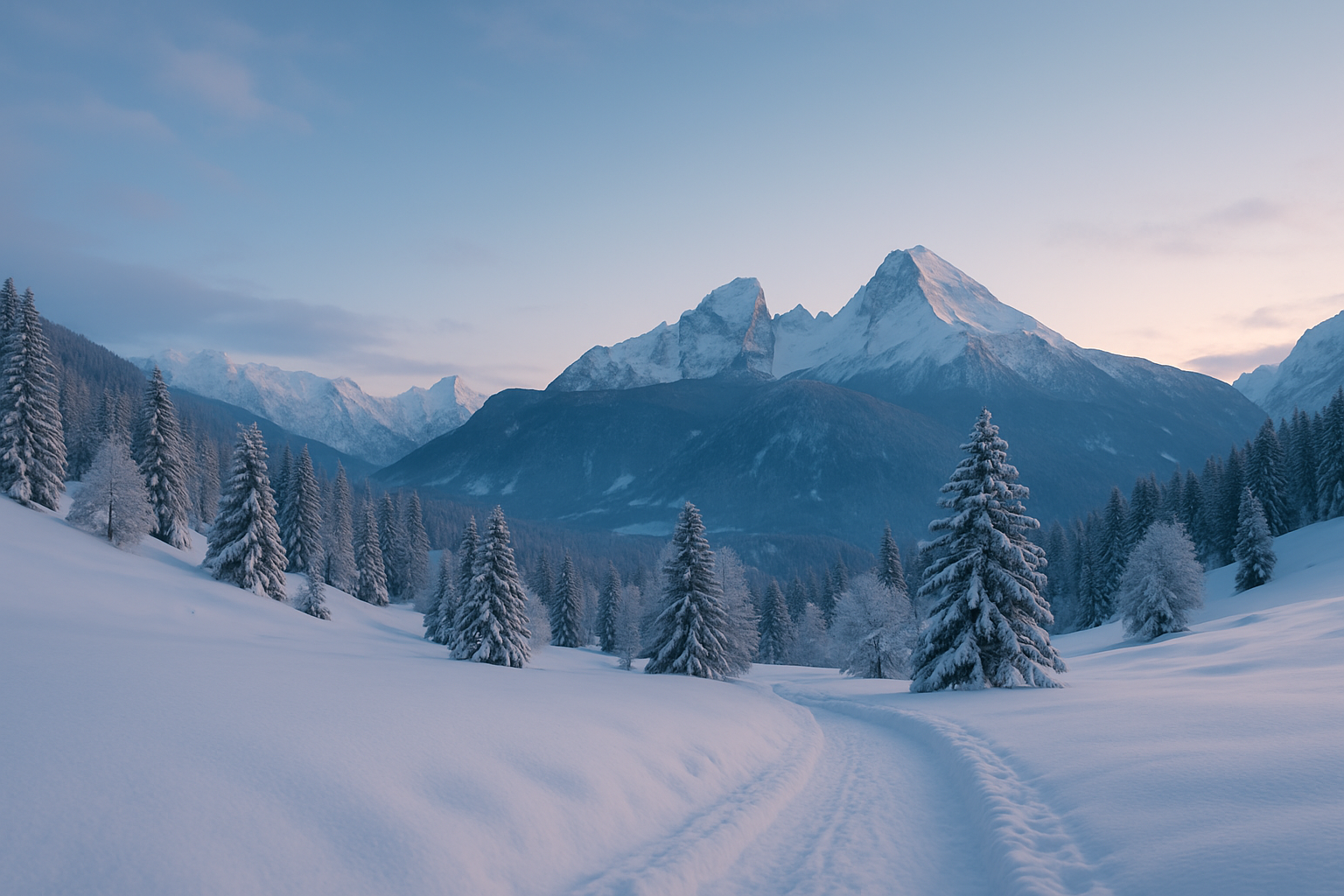
Berchtesgaden National Park is one of the few German Alpine national parks and offers a protected, wildly romantic winter landscape. Here you'll find snow-covered forests, frozen lakes, and spectacular mountain panoramas – most notably the majestic Watzmann. Cleared winter hiking trails lead through protected habitats that are particularly tranquil during the cold season – an ideal setting to breathe deeply.
Best months for snowshoeing
The peak season for winter hiking in Berchtesgaden is between December and mid-March – depending on snow conditions and avalanche danger. January and February see the most snow at higher elevations. From February onwards, some more challenging tours, such as the one to the Ice Chapel, are more frequently accessible, provided conditions are suitable.
What to expect in winter: weather & snow conditions
Typical conditions are dry, sunny high-pressure systems with clear views of the Alpine peaks – however, the weather can also be changeable: from icy clear to foggy and stormy. Important: Check the current weather forecast and the avalanche bulletin from the Bavarian Avalanche Warning Service before every tour.
- Top reasons for winter hiking in Berchtesgaden
- Alpine panorama with King Watzmann & Königssee
- Berchtesgaden National Park with cleared winter trails
- Attractive combinations with cable cars & boat trips (e.g. Jennerbahn, Königssee)
- Varied tours for every fitness level
The most beautiful winter hiking trails in Berchtesgaden
Klausbach Valley Winter Hike – Family-Friendly Through the Valley
The Klausbach Valley tour is one of the most popular routes for beginners and families. The starting point is the Hintersee parking lot in Ramsau. The path is cleared and leads gently along the wintry Klausbach stream with only about 100 meters of elevation gain. A highlight is the modern suspension bridge with a view of the imposing Hochkalter mountains.
Duration: 2–2.5 hours round trip
Region: Berchtesgaden National Park
Special feature: Particularly suitable for strollers with large wheels or snow sleds
Dead Man – Hirschkaser: Panoramic trail for advanced hikers
This moderately difficult hike begins at the Hochschwarzeck parking lot and involves an ascent of approximately 600 meters. The trail leads through shady mountain forests and rewards hikers with a breathtaking 360° panorama at the top. The Hirschkaser Alm mountain hut is open in winter – a perfect place to stop for refreshments!
Duration: 3.5 hours
Region: Ramsau – Hirscheck area
Special feature: Ideal for sporty connoisseurs with a love of views
Winter hike to the ice chapel – Mystical & challenging
A true insider tip, only for experienced winter hikers: The ice chapel beneath the Watzmann East Face is a rare, cinnamon-snail-shaped glacier cave – even in winter! The starting point is in St. Bartholomä, accessible only by boat across Lake Königssee. The route (400 m elevation gain, untracked) absolutely requires avalanche safety and stable weather conditions.
Duration: 3 hours
Region: Königssee – Watzmann massif
Special feature: A magical and mystical natural wonder under strict conditions
Jenner mountain station winter panorama trail – barrier-free & scenic
This leisurely high-altitude hike starts directly at the Jennerbahn mountain station. The easy route leads along cleared paths without any significant inclines (< 100 m elevation gain) to the panoramic plateau with the best views of the Königssee and Watzmann mountains.
Duration: 1–1.5 hours
Region: Jenner – near Königssee
Special feature: Barrier-free access, also suitable for children and seniors
Winter hike to the Purtschellerhaus – Only for experienced hikers
The challenging snowshoe tour to the Purtschellerhaus requires fitness, sure-footedness, and winter experience. From the starting point on the Rossfeldstraße (Ofnerboden), the route climbs steeply (800 meters in altitude) – usually icy. In clear conditions, a unique view opens up across the German-Austrian border.
Duration: 4–5 hours
Region: High Göll Massif
Special feature: Only accessible when there is absolute avalanche safety!
- Route Highlights at a Glance
- Ice Chapel: unique glacier formation
- Hirschkaser Alm: A place to stop for refreshments at 1,390 m with panoramic views
- Purtschellerhaus: Close to the Austrian border
- Jenner Winter Trail: easy panoramic hike with gondola access
Winter hiking by difficulty level: Easy, Moderate, Challenging
Easy winter hikes for beginners & families
- Watzmannblick Winter Loop – Start near Schönau at the Engedey car park, approx. 100–150 m elevation gain, 2-hour loop, well-maintained. Ideal for relaxed views of the Watzmann with minimal effort.
- Klausbachtal – a perfect route for leisurely snowshoeing without steep inclines.
- Magical Winter Trail Hochschwarzeck – Easy circular route (max. 150 m elevation gain, 1.5 hours), with a light art installation on December evenings. Start at the Hochschwarzeck car park, also exciting for families.
- Jenner mountain station – Easy high-altitude trail with a unique lake view far from the hustle and bustle.
Moderately difficult tours with panoramic views
- Hirschkaser – Toter Mann – so, ideal for ambitious beginners with experience.
- Winter trail to the Grünstein – From the Wimbach bridge (Ramsau), ascend approximately 580 meters in altitude in 3–3.5 hours to the panoramic mountain overlooking the Königssee. Steeper sections of the trail – crampons or ice axes are recommended.
Challenging tours for experts and experienced hikers (pay attention to avalanche conditions!)
- Winter hike to the ice chapel – untracked terrain, tricky when avalanche warning levels are high.
- Winter hike to the Schärtenalm – starting at Wimbachbrücke, 700 m elevation gain, 3.5–4 hours. Steep and partly icy – snowshoes or crampons recommended.
- Purtschellerhaus – so, the most challenging ascent with over 800 meters of elevation gain.
- Examples sorted by difficulty level:
- Easy: Watzmannblick winter loop (2h), Klausbachtal (2.5h)
- Medium: Hirschkaser, Grünstein, Schärtenalm
- Difficult: Ice Chapel, Purtscheller House
Safety while snowshoeing: Tips & equipment
Important safety tips
- Never hike alone – better in groups
- Always check the current avalanche report .
- Use only marked winter routes
- Respect wildlife sanctuaries – high fines possible
Essential equipment for winter
- Warm clothing in layers
- Spikes, crampons or snowshoes (depending on the route)
- Bivouac sack, first aid kit & fully charged mobile phone
- Gaiters and hiking poles are recommended in deeper snow.
Understanding the avalanche bulletin correctly
Check the avalanche bulletin daily. Pay attention to the warning level (1–5), snowpack, and fresh snow forecasts. This is essential for tours like those to the Eiskapelle or Purtschellerhaus. Also, use apps like "SnowSafe" or Outdooractive.
- Checklist: Winter hiking equipment
- Waterproof backpack with first aid kit
- Thermos & energy bars
- Offline map of the region & headlamp
- Warm clothing, hat & gloves
Comparison table: Overview of winter hiking routes
| Hike | difficulty | Elevation gain | Length of time | Road conditions | Avalanche safety | Outlook | Place to stop for refreshments | Special features |
|---|---|---|---|---|---|---|---|---|
| Klausbach Valley | Light | 100 | 2–2.5h | Cleared | High | Hochkalterblick | No | Suspension bridge |
| Dead Man – Hirschkaser | Medium | 600 | 3.5h | Forest path, cleared | Medium | 360° panorama | Yes | Alpine hut open |
| Ice Chapel | Difficult | 400 | 3h | Untracked | Critical | Glacier view | No | Only in good weather |
| Jenner Panorama Trail | Light | <100 | 1–1.5h | Cleared | High | Königssee | Yes | Low barrier |
| Purtscheller House | Difficult | 800 | 4–5h | Steep, icy | Low | D & A View | No | Border route |
Common Mistakes & Pro Tips for Beginners
- Mistakes to avoid:
- Setting off without up-to-date information on weather/avalanche conditions
- Late tour start – darkness comes early
- Unsuitable footwear without tread
- Missing markings in the snow – losing your bearings
- Pro tips for safe winter hiking:
- Save tour offline in Komoot or Outdooractive
- Start early – best lighting conditions in the morning
- Take spikes/crampons as standard equipment
- Plan a break with hot tea & your favorite spot
FAQ about winter hiking in Berchtesgaden
What is the most beautiful easy winter hike for beginners?
The Watzmannblick winter loop and the Jenner panorama trail are ideal options. Both routes are well-maintained, have minimal elevation gain, and offer magnificent views – perfect for starting your winter hiking journey.
Do I need to bring snowshoes?
No – only on untracked or more challenging trails such as those to the Ice Chapel or the Schärtenalm. On cleared trails like those to the Jenner or Klausbachtal, winter hiking boots with good tread and optional crampons are perfectly sufficient.
How can I find out the current avalanche situation?
Via the official Bavarian avalanche warning service . There you will find daily updated information on the snow conditions and warning levels – essential before every tour.
Can I go winter hiking with children?
Definitely! The Klausbach Valley loop, the Magical Circular Trail at Hochschwarzeck and the ride on the Jennerbahn combined with a short panoramic trail are also suitable for families with small children.
What should you do if you get lost along the way?
Stay calm, use GPS or offline maps, and turn back if possible. Never go off-trail – this risks violating wildlife protection laws and poses an avalanche danger!
Are there guided winter hikes?
Yes, for example from the Berchtesgaden National Park House or through local mountain guides. Particularly suitable for beginners who want to hike in alpine snow for the first time.
The most important information at a glance
- Berchtesgaden offers over 10 fantastic winter hiking trails for all difficulty levels.
- Best months: December to March – depending on the weather and snow conditions
- Klausbachtal, Jenner and Watzmannblick are ideal destinations for beginners.
- Experienced hikers choose Schärtenalm, Eiskapelle or the Purtschellerhaus
- Safety and equipment are paramount in winter conditions.
Conclusion: Experience the magic of winter up close.
Winter hiking in Berchtesgaden is more than just a simple outdoor activity – it's a nature experience of the highest caliber. Whether you're looking for a leisurely stroll, a family outing, or an experienced mountaineer, you'll find suitable and scenically stunning routes. From easy trails like the Jenner Panorama Trail to challenging summit tours to the Ice Chapel, the region offers pure variety. It remains essential to treat nature, weather conditions, and safety responsibly. Then your winter adventure will be unforgettable.
Find more Alpine inspiration at Alpsland – sustainable hoodies, T-shirts & accessories for mountain lovers.