
Ski tours in the Bernese Oberland: The best routes in January
Ski tours in the Bernese Oberland: The best routes in January
January is considered peak season for ski touring in the Bernese Oberland – fresh powder snow, stable weather conditions, and accessible routes from mid-altitudes make this month ideal for tours of all difficulty levels. From easy introductory tours on the Seefeldhorn to scenic, panoramic tours like the Gummfluh, and even alpine challenges like the Rosenhorn: this guide provides specific routes with all the essential information on elevation gain, duration, avalanche risks, and tour characteristics. With a comparison table, safety tips, and a packing list, you'll be perfectly prepared for your January ski tour in the Bernese Oberland.
- Introduction & Overview
- Top ski tours for beginners
- Routes for advanced hikers:
- Challenging ski tours for professionals
- Equipment & safety tips for ski touring in January
- Comparison table: Ski tours in the Bernese Oberland at a glance
- Avoiding Mistakes & Pro Tips
- Key Takeaways
- FAQ – Frequently Asked Questions about Ski Touring in January
- Conclusion
Introduction & Overview
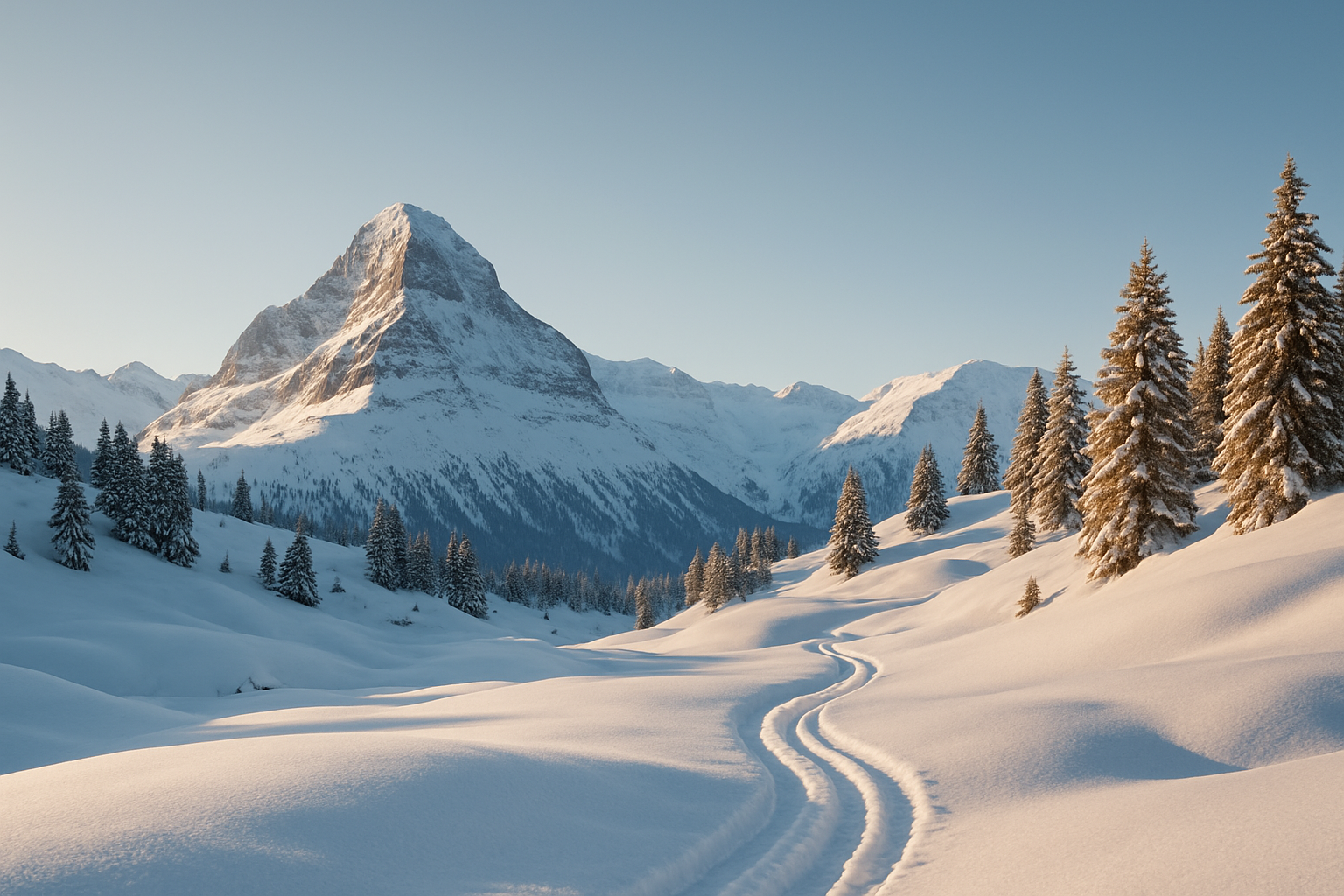
The Bernese Oberland is one of Switzerland's most popular ski touring regions – and for good reason: the diversity of terrain, altitudes, and starting points covers an enormous range of tours. In January, regions like the Kiental, Grindelwald, and Diemtigtal are particularly well-developed and offer safe conditions. Beginners especially benefit from the lower elevations with south-facing slopes (e.g., Wätterlatte or Seefeldhorn), while intermediate and advanced skiers can aim for peaks like Bundstock, Wildgärst, or Rosenhorn – depending on the avalanche situation.
Top ski tours for beginners
Rothorn (Kiental) – The classic beginner tour
The Rothorn (2,419 m) from Griesalp offers everything a good introductory tour should: a moderate 750–800 meters of elevation gain, easy access by car via Kiental, and a rewarding summit view. The tour takes about 3 to 4 hours to ascend and follows gentle slopes. With sufficient snow cover, the descent is a delight and, provided the conditions are stable, poses little avalanche risk.
Seefeldhorn (Axalp) – Scenic views above Lake Brienz
At 2,281 m, the Seefeldhorn is an easily accessible destination for beginners. The tour starts on the Axalp (near Brienz), a sunny high plateau. In 3.5 to 4 hours, you'll cover around 850–900 meters of elevation gain. The terrain is gentle, and the route is varied. A particular highlight: the impressive view of Lake Brienz – a real insider tip for those looking for beginner ski tours in Switzerland!
Wätterlatte (Kiental) – Short tour with a great panorama
This easy tour leads to the Wätterlatte (2,007 m) from the starting point in Metsch (near Kiental). With only 700–750 meters of elevation gain, it's ideal for half-day trips or for first-timers using skins. The summit can be reached in about 3 hours, where you can enjoy a beautiful view into the Kandertal valley and towards the Blüemlisalp. Due to its southern exposure, the route is considered particularly avalanche-safe in January.
-
Why is it ideal for beginners?
- Low altitude (700–900 m)
- Easily accessible by car or public transport
- Barely exposed passages
- Scenic but easy descents
Routes for advanced hikers:
Bryndli – Sattelhorn (Schwendi)
A delightful ski tour in the Hasli Valley leads from the small hamlet of Schwendi via Bryndli to the 2,352-meter-high Sattelhorn. With 1,100–1,200 meters of elevation gain, this tour requires a good level of fitness. Technically, it offers varied terrain with open hollows and gentle slopes. The view over the Grimsel region is a true highlight on a clear day.
Gummfluh (Lauenen near Gstaad)
Starting in Lauenen near Gstaad, this 4.5–5-hour tour leads up to the Gummfluh (2,458 m). The elevation gain is approximately 1,100 meters. Especially in the upper section, the terrain is alpine, requiring sure-footedness and some experience. The reward is powder snow, magnificent silence, and breathtaking views of the Pays d'Enhaut.
Bundstock (Stechelberg)
The impressive tour to the Bundstock (2,757 m) starts in the Lauterbrunnen Valley near Stechelberg. The ascent involves an elevation gain of 1,200 meters and takes approximately 5.5–6 hours. The route is not only scenically spectacular – with views of the Eiger, Mönch, and Jungfrau – but also an excellent powder snow tour when conditions are right.
Rauflihorn – A scenic tour in the Diemtig Valley
This relatively easy tour for intermediate hikers leads from Grimmialp in the Diemtigtal Nature Park to the Rauflihorn (2,323 m). You'll cover the approximately 1,100 meters of elevation gain in 4.5 to 5 hours. The route across sunny south-facing slopes is particularly popular when snow conditions are stable. Low avalanche risk and the magnificent panorama make this route a top choice for those seeking a more leisurely experience in January.
| tour | Elevation gain | Length of time | region | difficulty |
|---|---|---|---|---|
| Bryndli – Sattelhorn | 1,100–1,200 m | 5–6 h | Haslital | Medium |
| Gummfluh | 1,100 m | 4.5–5 h | Saanenland | Medium |
| Bundstock | 1,200 m | 5.5–6 h | Lauterbrunnen | Medium |
| Rauflihorn | 1,100 m | 4.5–5 h | Diemtigtal | Medium |
Challenging ski tours for professionals
Wildgärst (from Bachalpsee via Firstbahn)
This high-alpine day tour leads to the 2,891 m high Wildgärst via the Bachalpsee above Grindelwald. After taking the Firstbahn cable car, the ascent begins with 1,400–1,500 meters of elevation gain and takes approximately 6 to 7 hours. The route leads through steeper terrain with excellent views of the Wetterhorn and Schreckhorn. Only suitable for experienced ski tourers in good physical condition and with avalanche transceiver experience!
Cheibehorn (Kandertal)
The starting point is Fäldbach above Helberg in the Kandertal valley. The ski tour to the Cheibehorn (2,952 m) is one of the most physically demanding day tours, with an ascent of 1,500–1,600 meters and a climb of around 6–7 hours. The route leads through alpine terrain with some steep slopes: it is only accessible in the best conditions and with alpine experience. The breathtaking panorama over the Blüemlisalp massif more than compensates for the effort.
Rosenhorn (via Gaulihütte, 2 days)
The Rosenhorn (3,689 m) is one of the most challenging ski touring destinations in the Bernese Oberland. The tour starts in Urbachsäge in the Hasli Valley. After ascending approximately 1,300 meters to the Gaulihütte mountain hut, the glacier climb to the summit involves another 500–600 meters of elevation gain. The tour takes two days and requires good physical condition, glacier experience, and stable weather. It is only recommended with complete equipment and an overnight stay at the Gaulihütte.
- Good physical condition for 6-8 hour climbs
- Experience in alpine terrain
- Knowledge of how to use avalanche transceiver equipment
- Knowledge of glacier travel on tours such as the Rosenhorn
Equipment & safety tips for ski touring in January
Essential equipment overview
- Touring skis with skins & crampons
- Avalanche transceiver, probe, shovel
- Weather protection: hardshell jacket, gloves, hat
- Map/GPS device
- First aid kit
- Thermos flask with hot drink
Staying safe: Avalanches & weather conditions
- Check the daily avalanche bulletin (www.slf.ch)
- Adapt tour to ability and weather conditions
- Travel only in small groups (4-6 people).
- Inform emergency contacts before the tour
Comparison table: Ski tours in the Bernese Oberland at a glance
| tour | difficulty | Elevation gain | Length of time | region | Avalanche risk | Downhill potential |
|---|---|---|---|---|---|---|
| Rothorn | Light | 750–800 m | 3–4 h | Kiental | Small amount | Simple & panoramic |
| Seefeldhorn | Light | 850–900 m | 3.5–4 h | Brienz Alps | Medium | Views & easy slopes |
| Gummfluh | Medium | 1,100 m | 4.5–5 h | Saanenland | Medium | Powder & Alpine Forms |
| Bundstock | Medium | 1,200 m | 5.5–6 h | Lauterbrunnen | Medium | Powder snow & panoramic views |
| Wilderness | Difficult | 1,400–1,500 m | 6–7 h | Grindelwald | High | Spectacular, with steep sections |
| Rosenhorn | Difficult | 1,700–1,900 m | 2 days | Bernese High Alps | High | High alpine with glaciers |
Avoiding Mistakes & Pro Tips
Common mistakes
- Starting too late in the day (snow quality suffers)
- Underestimation of the condition requirement
- Planning tours without current avalanche information
- Don't think about group dynamics (pace, safety)
Practical Pro Tips
- Start early to take advantage of the best snow.
- Beginners should choose avalanche-safe south-facing slopes (e.g., Seefeldhorn).
- Experienced ski tourers go out directly after fresh snowfall, 2 days later.
- Better to turn back than to risk it – the summit isn't going anywhere.
The most important information at a glance
- January is ideal for ski touring at 1,500–2,500 m.
- There are tours for every level – from the Rothorn to the Rosenhorn
- Avalanche safety and equipment are essential.
- Use the comparison table to choose the right tour.
- Advanced and professional skiers will find excellent conditions in January.
FAQ – Frequently Asked Questions about Ski Touring in January
Which ski tours in the Bernese Oberland are particularly avalanche-safe in January?
Tours like the Rothorn near Kiental or the Wätterlatte are considered relatively avalanche-safe when snow conditions are stable and there is sufficient cover in the lower sections. Nevertheless, the daily avalanche bulletin from the SLF (Swiss Federal Institute for Snow and Avalanche Research) is essential reading.
Which tour is suitable for beginners with little experience?
The Seefeldhorn from Axalp is perfect for beginners. Technically easy, easily accessible by bus and with fantastic views of Lake Brienz – there's hardly a better way to get started in the world of ski touring.
When is the best time of day for a tour?
An early start between 7 and 8 a.m. is ideal. This way you benefit from the best snow quality and reduce the risk from daily avalanche activity in the afternoon.
Is the Rosenhorn climb feasible in January?
Yes – but only with very stable weather and snow conditions. The high-alpine tour to the Rosenhorn requires two days, including an overnight stay in the Gaulihütte, glacier equipment, and alpine experience.
Can I use public transport to get to the tours?
Many starting points such as Axalp (Brienz), Stechelberg, Lauenen or Grimmialp are accessible by public transport. However, travel should be planned well in advance – bus services are sometimes limited.
What is part of the standard equipment for a ski tour?
Essential equipment includes touring skis with skins, crampons, avalanche transceiver with probe and shovel, weatherproof clothing, a first-aid kit, GPS/map, and a thermos with hot liquid. See our packing list for details!
How do I find suitable ski tours for my skill level?
Use our comparison table: It shows difficulty level, altitude, duration and region at a glance – perfect for comparing with your skills and how you feel on the day.
Conclusion
Whether you're a ski touring novice or an experienced mountaineer, the Bernese Oberland offers ideal conditions in January for both leisurely and challenging tours. Thanks to a wide selection of routes such as the Rothorn, Gummfluh, and Rosenhorn, you can choose your destination based on your experience level and the snow conditions. Proper equipment, avalanche safety, and timely planning remain essential for a successful experience. Now it's up to you: choose your tour, check the avalanche bulletin, and immerse yourself in the winter wonderland of the Bernese Alps!
Find more Alpine inspiration at Alpsland – sustainable hoodies, T-shirts & accessories for mountain lovers.