
Winter hikes in the Allgäu: Discover the most beautiful routes
Winter hikes in the Allgäu: Discover the most beautiful winter hiking trails
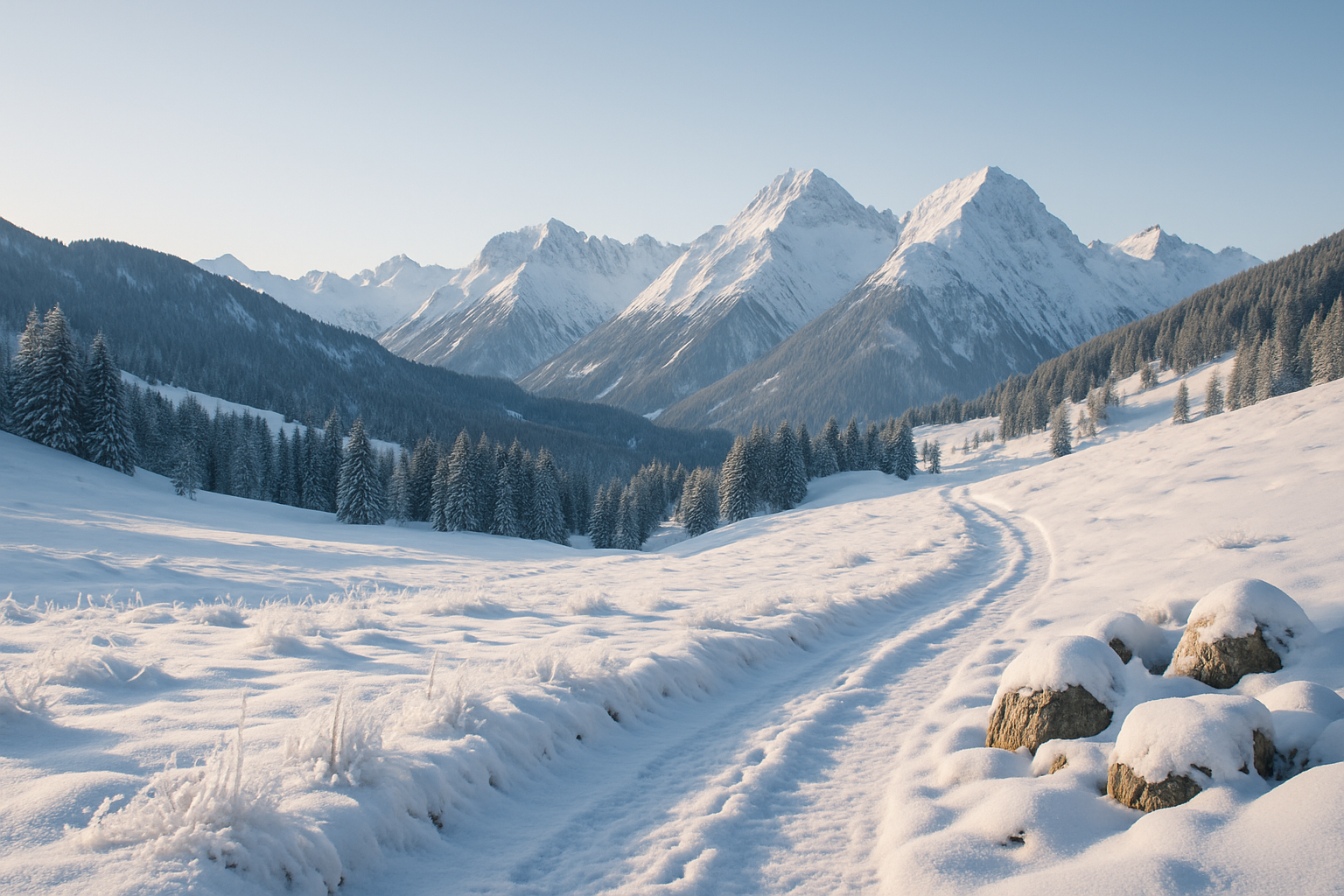
Winter transforms the Allgäu region into a glittering world of snow and ice, crisscrossed by cleared paths that lead through snow-covered forests, up to rustic alpine pastures, and along scenic high-altitude trails. Especially between January and March , winter hikes in the Allgäu offer ideal conditions: stable snow cover, impressive visibility, and quiet trails away from the ski slopes. In this article, we present 10 of the most beautiful winter hiking trails in the Allgäu – from easy strolls to more challenging snowshoe hikes. Tours such as the winter hike to the Gaisalpe , the Ofterschwanger Horn , or the Rotspitz Hut in the Hochgrat area await you. We also provide you with equipment, safety, and planning tips for unforgettable winter excursions in the Allgäu . Let yourself be inspired – your next winter adventure is waiting!
- 1. The fascination of winter hiking in the Allgäu
- 2. The 10 most beautiful winter hiking trails in the Allgäu
- 3. Safety & Equipment for Snowshoeing
- 4. Comparison: Winter hikes in the Allgäu region at a glance
- 5. Avoid mistakes: Tips & common pitfalls
- 6. FAQ: Frequently asked questions about winter hikes in the Allgäu region
- 7. Conclusion: Winter bliss on Allgäu trails
The fascination of winter hiking in the Allgäu
Why the Allgäu region is perfect for snowshoeing
With its diverse landscape – from gently rolling hills in the East Allgäu to wildly romantic valleys and high alpine sections in the west – the Allgäu region is ideal for snowshoeing . Cleared and partly groomed winter hiking trails lead to historic alpine huts, viewpoints, or romantic castle ruins, such as the Falkenstein circuit in Pfronten.
Advantages of winter hiking compared to ski touring
Unlike ski touring, winter hiking in the Allgäu region doesn't require any complicated equipment or technical skills. Many trails are also beginner-friendly, suitable for families, and offer opportunities for a cozy break – for example, at the Gaisalpe near Oberstdorf or the Vorderen Krumbachalpe in the Kleinwalsertal valley.
When is the best time for winter hikes in the Allgäu region?
The ideal season usually begins in January and lasts until the beginning of March . During this time, there is often a stable snow cover, coupled with clear visibility – perfect for panoramic tours such as the Bolsterlang Panorama Trail or the Ofterschwanger Horn .
- Impressive mountain panoramas
- Silent forests & snow-covered alpine pastures
- Traditional places to stop for refreshments
- Easily accessible, cleared paths
The 10 most beautiful winter hiking trails in the Allgäu
Winter hike to the Gaisalpe (easy)
This tour starts in Reichenbach near Oberstdorf and leads to the Gaisalpe alpine pasture on a groomed winter trail. With an elevation gain of around 250 meters and a hiking time of 1.5 to 2 hours, it is ideal for beginners. The hut is picturesquely situated beneath imposing cliffs and, when open, offers a warming break with homemade dishes. Highlight : The view into the snow-covered Iller Valley.
Winter hike to the Buchelalpe (moderate)
This hike begins in Gunzesried near Blaichach and leads for about 2.5 km to the charming Buchelalpe alpine pasture. With an elevation gain of around 400 meters and a hiking time of 2 to 2.5 hours, you'll need a reasonable level of fitness. The landscape is varied, with sections through snow-covered forest paths and wide trails. The alpine pasture is partially open and has a rustic, traditional atmosphere.
Winter hike to the Ofterschwanger Horn (moderate)
Those taking the World Cup Express chairlift – assuming it's running – start at the mountain station and hike along a groomed ridge trail to the summit of the Ofterschwanger Horn . With 500 meters of elevation gain and a hiking time of around 3 hours, this is one of the more challenging tours. You'll be rewarded with a magnificent panoramic view from the Iller Valley to the Zugspitze.
Bolsterlang Panorama Trail (easy)
An absolute classic for beginners and those who enjoy a leisurely hike. The trail starts at the valley station of the Hörnerbahn cable car in Bolsterlang and offers scenic views across gently rolling terrain (100–200 meters of elevation gain) . The 1.5–2 hour loop is well-marked and maintained – ideal for getting started with winter hiking in the Allgäu region .
Snowshoe hike to the Rotspitz Hut (moderate to difficult)
This alpine tour begins at the Hochgratbahn mountain station near Oberstaufen. It leads past steep slopes and offers spectacular views to the Rotspitz Hut . With an elevation gain of 500–600 meters and a hiking time of approximately 4 hours, the route is suitable for experienced winter hikers. On a clear day, you can see all the way to Lake Constance – breathtaking!
Bonus: Family-friendly route – Schwangau Stallion Park
Ideal for a winter outing in the Allgäu region for families: From Schwangau, you can walk along cleared paths to the impressive Hengstpark (stallion park) in less than an hour . With an elevation gain of less than 100 meters and a view of Neuschwanstein Castle , it's perfect for children and seniors.
Other recommended tours
- Alpe Schwande (easy): Start in Oberjoch, 200 m elevation gain, 1–1.5 hours. Great view of the Tannheim Mountains.
- Vordere Krumbachalpe (easy): Start in Hirschegg, 150–180 m elevation gain, approx. 1.5 hours. Stop for refreshments at an open alpine pasture on the panoramic circular trail.
- Falkenstein circular trail (easy): 130 m elevation gain, 1 hour from Zumsand/Vils. Historical route with romantic castle ruins.
- Balderschwang–Scheuenalpe high-altitude trail (moderate): 200–300 m elevation gain, 2–2.5 hours. Scenic ridge trail for experienced hikers.
Overview: Route summary
| name | difficulty | Length of time | Elevation gain | Starting point | Place to stop for refreshments | season |
|---|---|---|---|---|---|---|
| Gaisalpe | light | 1.5–2 h | approx. 250 m elevation gain | Oberstdorf (Reichenbach) | Yes | Dec–Mar |
| Buchelalpe | medium | 2–2.5 h | approx. 400 m elevation gain | Gunzesried | conditional | Jan–Mar |
| Ofterschwanger Horn | medium | 3 h | 500 m elevation gain | Mountain station World Cup Express | no | Dec–Mar |
| Bolsterlang Panorama Trail | light | 1.5–2 h | 100–200 m | Hörnerbahn valley station | Yes | Dec–Mar |
| Rotspitz Hut | medium-difficult | 4 h | 500–600 m | Hochgratbahn mountain station | conditional | Feb–March |
| Schwangau Stallion Park | light | 45–60 min | <100 m | Schwangau (parking lot) | no | Dec–Mar |
Safety & Equipment for Snowshoeing
Important safety information for winter tours
Especially in winter, weather, light, and terrain conditions are crucial. Check the current avalanche situation beforehand, start early, stick to marked trails, and be mindful of wildlife protection zones. Conditions can change rapidly, particularly on tours like the one to the Rotspitz Hut – caution is essential.
Recommended equipment for winter
- Winter hiking boots (warm, with good tread)
- Weatherproof jacket & winter trousers
- Functional underwear (e.g. Merino)
- Backpack with first aid kit & thermos flask
- Spikes / crampons for slippery conditions
- Walking sticks with winter baskets
Specific dangers in the Allgäu winter
Besides avalanches (above approximately 1600 m), icy paths and sliding snowpacks are sources of danger. Furthermore, wildlife sanctuaries, such as those in the Gunzesried Valley, should be strictly respected – also out of consideration for wild animals, which are particularly vulnerable in winter.
- Check the weather and avalanche report before the tour.
- Use the layering principle when choosing clothing
- Early tour start due to daylight
- Wear appropriate footwear and, if necessary, spikes.
- Stay on marked trails and do not go through wildlife sanctuaries.
- Carry a mobile phone with a fully charged battery
- Beware of icy patches – use poles
Comparison: Winter hikes in the Allgäu region at a glance
| Hike | difficulty | Length of time | Elevation gain | Road conditions | panorama | Stop for refreshments | Family-friendly |
|---|---|---|---|---|---|---|---|
| Gaisalpe | light | 1.5–2 h | 250 m elevation gain | cleared | high | Yes | Yes |
| Alpe Schwande | light | 1–1.5 h | 200 m | cleared | very high | conditional | Yes |
| Buchelalpe | medium | 2–2.5 h | 400 m | wintry, partly steep | high | Yes | conditional |
| Ofterschwanger Horn | medium | 3 h | 500 m elevation gain | prepared | excellent | no | no |
| Bolsterlang Panorama Trail | light | 1.5–2 h | 150 m | cleared | high | Yes | Yes |
| Rotspitz Hut | medium-difficult | 4 h | 600 m | alpine terrain | sensational | no | no |
| Schwangau Stallion Park | light | 45–60 min | <100 m | cleared | very high | no | Yes |
Avoiding mistakes: Tips & common pitfalls
Starting unprepared – a common mistake
Traveling without a map or navigation system is negligent. Even on well-marked trails, such as the one to the Gaisalpe, fog can make orientation difficult.
Underestimating the weather and avalanche conditions
Especially for higher-altitude tours, such as the one to the Rotspitz Hut, a careful assessment of the current conditions is necessary. Check the warning levels beforehand.
Inappropriate clothing and equipment
Everyday shoes or jeans are unsuitable for snowshoeing in the Allgäu region . Breathable, warm clothing is essential.
Leaving too late – danger in the winter darkness
Dusk sets in early. Plan your trip so that you are back at your starting point no later than 4:30 pm .
- No tour planning or maps required
- Misjudging the duration or difficulty
- Do not stay on marked trails.
- Forgot important equipment
- Ignoring avalanche dangers
FAQ: Frequently asked questions about winter hikes in the Allgäu region
When is the best time for winter hikes in the Allgäu region?
From January to the beginning of March, there is usually stable snow cover with clear visibility. Tours such as the Bolsterlang Panorama Trail or to the Schwande Alpine pasture are then wonderfully accessible and offer the best views.
Which tours are suitable for beginners?
Ideal for beginners are hikes to places like the Gaisalpe (1.5–2 hours), the Alpe Schwande (1–1.5 hours), or the Hengstparkanlage Schwangau (under 1 hour). These tours are not too long, well-maintained, and some offer places to stop for refreshments.
Are all paths open and cleared in winter?
Not all of them. Official Allgäu winter hiking trails, such as those to the Gaisalpe or in Bolsterlang, are regularly maintained. Nevertheless, you should check the current conditions on allgaeu.de or with the local municipality shortly before starting your hike.
How dangerous is the avalanche risk for hiking in the Allgäu region?
For tours below 1500 m (e.g., Gaisalpe, Falkenstein), there is hardly any risk. At higher altitudes, such as to the Rotspitz Hut, it is essential to check the avalanche report daily!
May I bring my dog?
Generally yes – but only on a leash. Pay particular attention to leash requirements in wildlife sanctuaries such as around Gunzesried or Hirschegg and respect local regulations.
Conclusion: Winter bliss on Allgäu trails
Winter hiking in the Allgäu region is more than just exercise – it's an intense experience of nature amidst snow, silence, and breathtaking views. Whether you take a leisurely stroll to the Gaisalpe alpine pasture , explore the Hengstpark with children, or venture up to the Rotspitz-Hütte mountain hut , there are suitable tours for every level. Crucial to your experience are good preparation, weather-appropriate clothing, and responsible behavior. The examples shown provide a solid foundation for choosing your Allgäu winter hiking trail . So, bundle up, pack your backpack, and head out into the snowy mountains!
The most important information at a glance
- Winter hiking trails like Gaisalpe or Bolsterlang are ideal for beginners and those who enjoy the scenery.
- Those seeking a greater challenge can hike to the Rotspitz Hut or up the Ofterschwanger Horn.
- Always pay attention to the weather, avalanche conditions, and daylight hours.
- Child-friendly and impressive: the short tours near Schwangau or to the Vordere Krumbachalpe.
- The period from January to March offers the best conditions for snowshoeing.
Find more Alpine inspiration at Alpsland – sustainable hoodies, T-shirts & accessories for mountain lovers.